
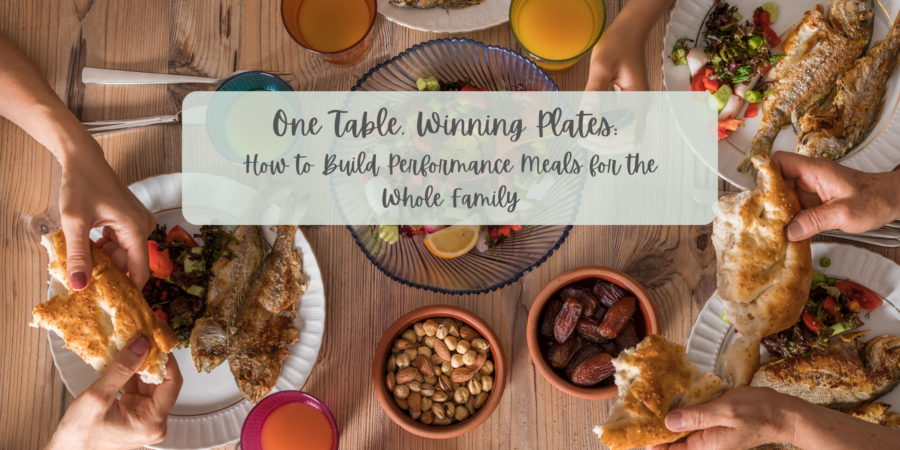
September is National Family Meals Month, making it the perfect time to bring performance nutrition to the family table. You do not need to prepare separate “athlete meals” and “family meals”—with the right building blocks, one meal can provide the nutrients an athlete needs while nourishing everyone at the table.
- Start with a quality protein. Protein supports muscle repair and recovery for athletes while also providing important nutrients for the entire family. Build meals around lean beef, chicken, turkey, fish, eggs, beans, lentils, or other protein-rich foods, then adjust portions based on each family member’s individual needs.
- Add an energy-producing carbohydrate. Carbohydrates are especially important for athletes because they help fuel training and replenish energy stores afterward. Rice, pasta, potatoes, whole grains, tortillas, bread, and other carbohydrate-rich foods can be served family-style so athletes with higher energy demands can add more to their plates.
- Fill the plate with color. Fruits and vegetables provide vitamins, minerals, antioxidants, and other nutrients that support overall health and recovery. Add a salad or roasted vegetables to dinner, serve fruit on the side, or create build-your-own meals with colorful toppings like tomatoes, peppers, avocado, corn, berries, or salsa.
- Don’t forget healthy fats. Foods like avocado, nuts, seeds, nut butters, olive oil, and fatty fish provide energy and essential fats that support health. They can also be an easy way to increase calories for athletes with higher energy needs without dramatically increasing the volume of food they have to eat.
- Make one meal adaptable for everyone. Taco bowls with lean beef, rice, beans, vegetables, cheese, and avocado or pasta bowls with lean protein, vegetables, sauce, and Parmesan allow everyone to customize portions. An athlete training for two hours may need more rice, pasta, or tortillas, while another family member may need a smaller serving—the ingredients do not have to change.
Performance nutrition does not have to complicate family dinner. Build meals around protein, carbohydrates, colorful produce, and healthy fats, then let each family member adjust portions to meet their individual needs.
